
 Start Read
 Recommend
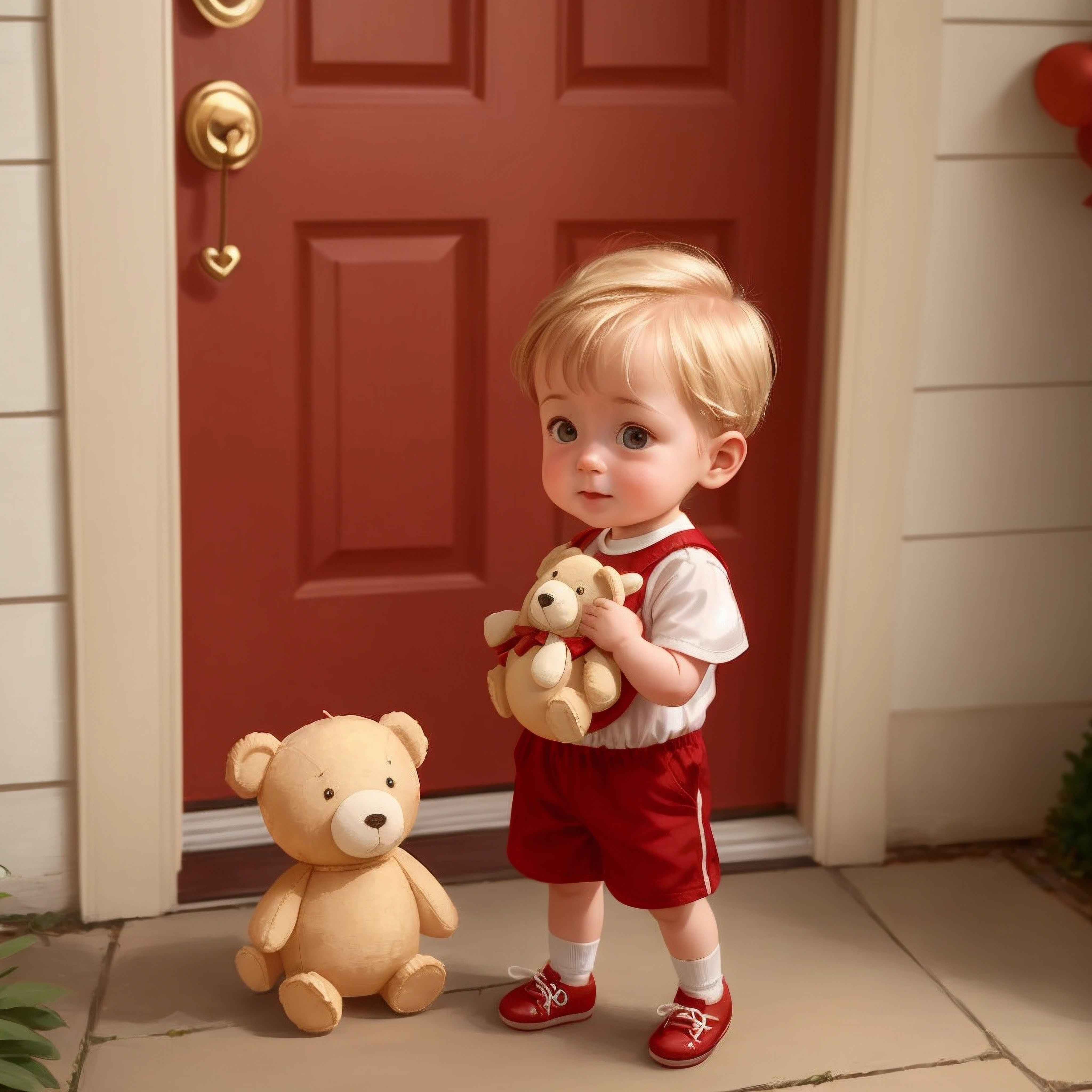
Henry does not win at anything. He tries his best and he is proud of his efforts.
Spending time with Dad
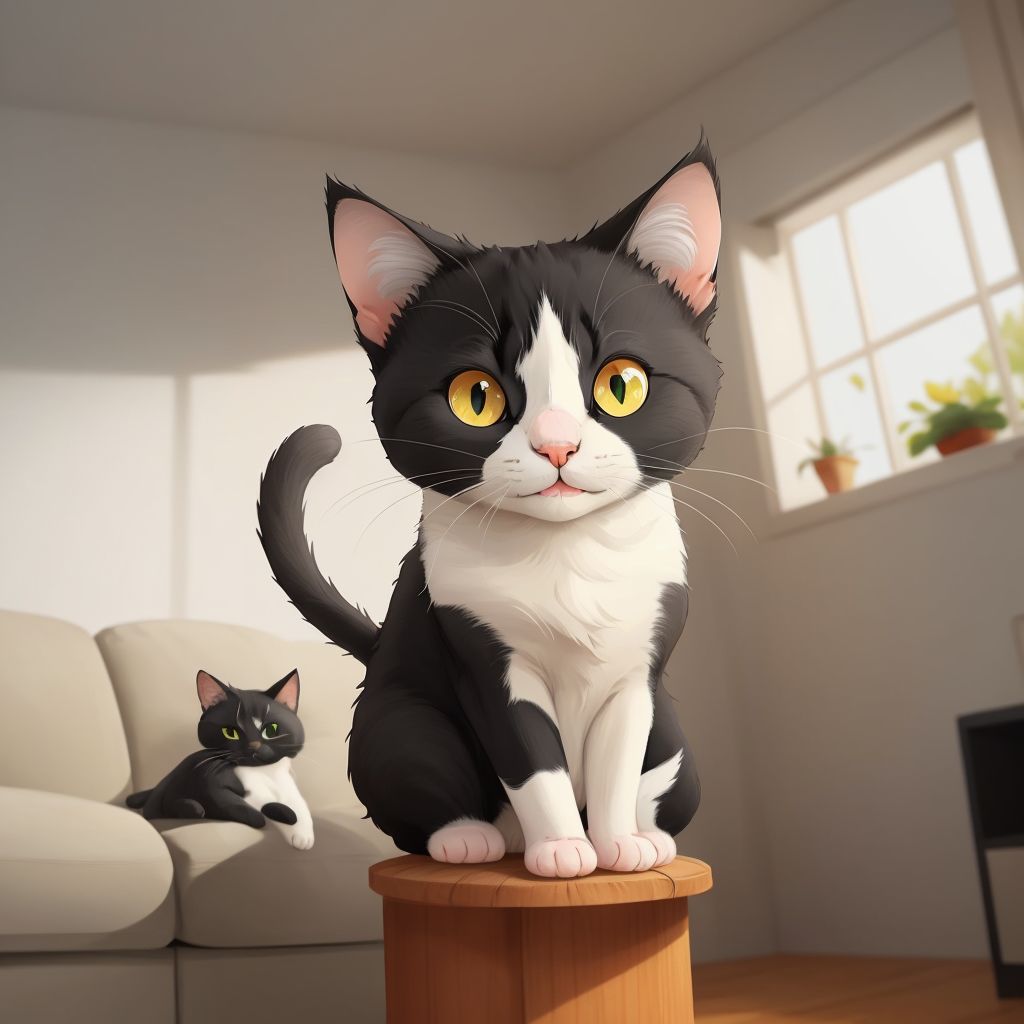
1. Monya learned the number one - he has one tail. The number must be drawn. 2. Monya has learned the number two - he has two ears. The number should be drawn. 3. Monya has learned number 3 - there are 4 pots of flowers on the window. He dropped one pot and there are 3 left. The number 3 must be drawn. 4. Monya counted that he has 4 paws. The number should be drawn. 5. Monya counted that there are 5 chairs around the table in the living room. The number should be drawn. 6. Monya counted the shoes near the door. There were 6 sneakers. The number should be drawn. 7. Monya counted the number of paintings in the room. There are 7 of them. The number must be drawn. 8. Monya counted the number of fish in the aquarium. There are 8 of them. The number must be drawn. 9. Monya counted the number of books on the shelf - there are 9 of them. The number must be drawn. 10. Monya went up to the yard and counted how many birds are on the tree. There are 10 of them. The number must be drawn.
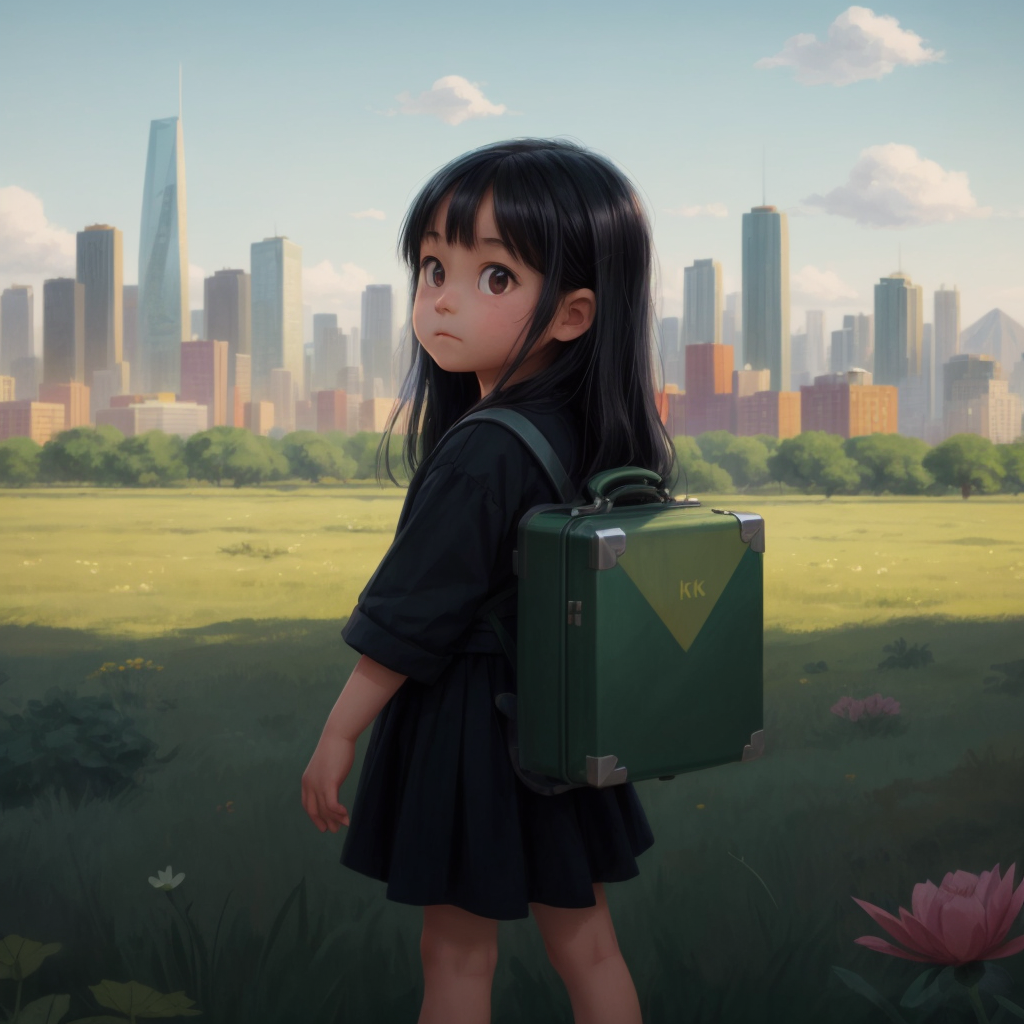
this book is about Judy and how she grew up despite the challenges God have given her. this will show her adventure and growth through the years
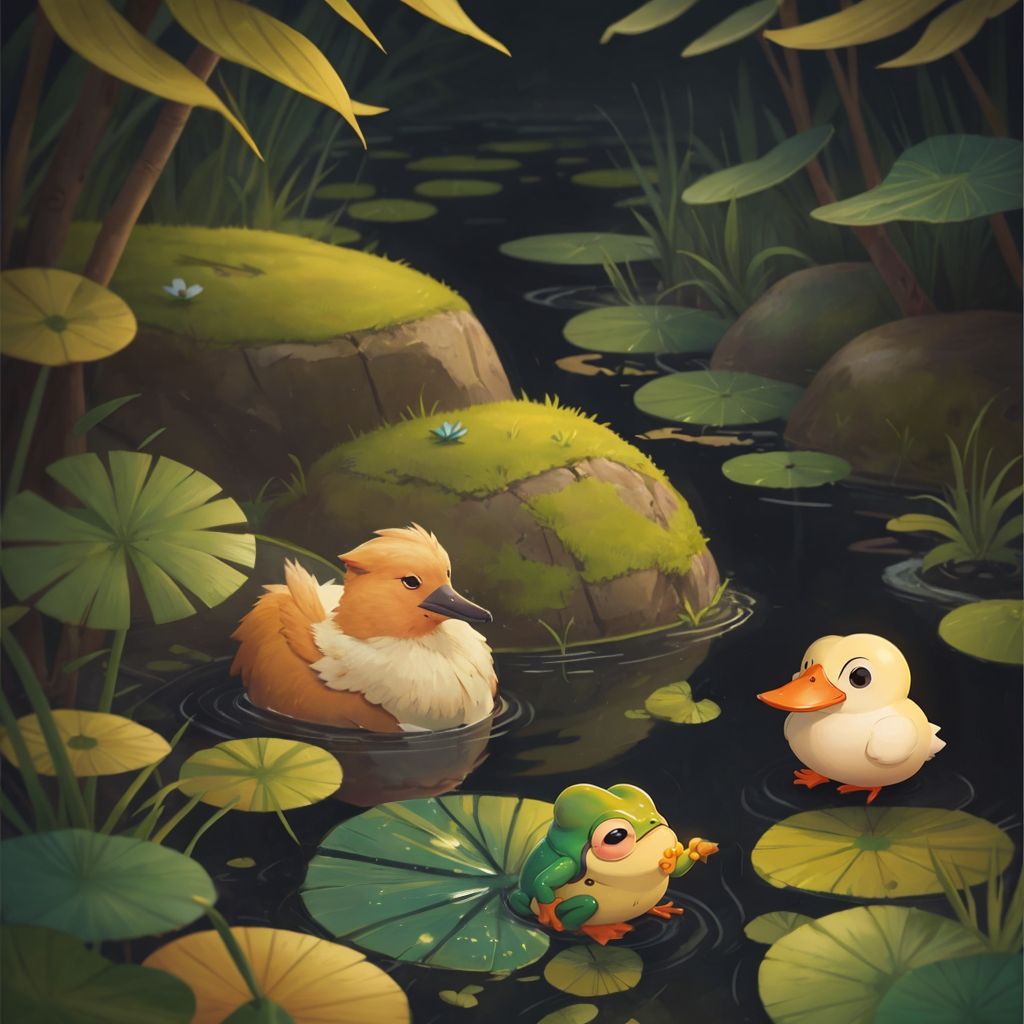
In a small pond surrounded by grass, lived Mimi the Cat, Didi the Duck, and Lulu the Frog. They were close friends who loved playing together, despite their differences. Mimi ran through the grass, Didi swam in the pond, and Lulu sang happily on lily pads. One day, Mimi felt jealous, thinking Didi and Lulu’s swimming made them better than her. She spread lies to cause doubt: telling Didi that Lulu thought he was a show-off and telling Lulu that Didi found her singing annoying. Hurt by these words, Didi and Lulu grew distant, and their friendship began to crumble. Soon, the pond became dirty with algae. Mimi got stuck, unable to escape. Didi and Lulu realized they had to save her. Working together, Didi cleared a path underwater while Lulu guided him. They rescued Mimi, putting their differences aside. Mimi admitted her mistakes and apologized for her actions. Didi and Lulu forgave her, and the three friends promised to always be honest and value their bond. From then on, they celebrated their unique strengths and supported one another, realizing that true friendship thrives on trust and understanding.
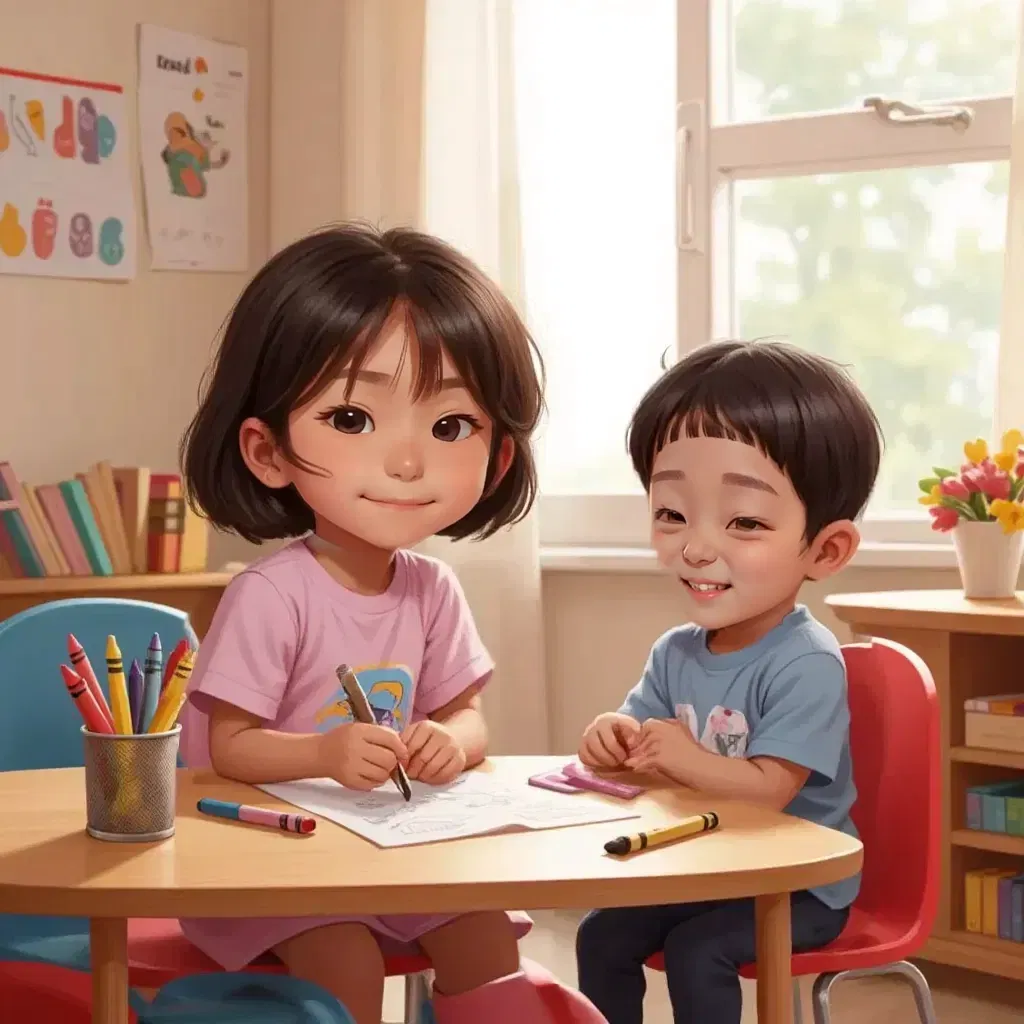
He wants to do everything I do, even if it's not his favorite car. If I'm drawing, he wants to have the same colored pencils, the same sketchbook. If I wear a ballet outfit, he wants to wear a ballet outfit, even though he's a guy. So I'm upset and I'm upset. What can I do?

In this there is a man who was going to a city where he cant find job. There a boy named Zarrar helped him and he became the richest man in the World.
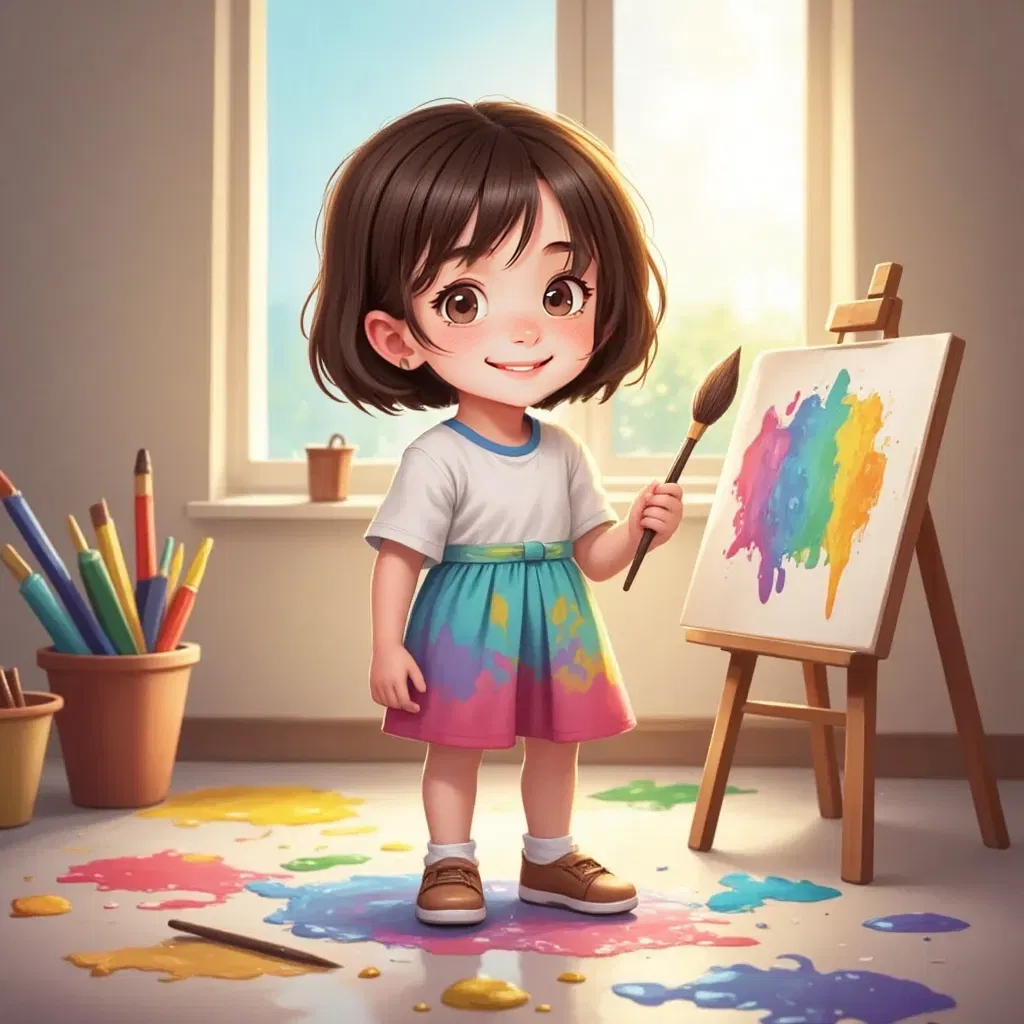
Page 1: Cover Title: Colors All Around Illustration: A rainbow with smiling sun and clouds in the background. Text: "Let’s explore the world of colors!" Page 2: Red Illustration: A big, shiny red apple. Text: "Red like an apple." Interactive Element: A tactile red felt apple sticker for children to touch. Page 3: Blue Illustration: A calm blue ocean with fish swimming. Text: "Blue like the ocean." Interactive Element: A wavy texture on the water to feel. Page 4: Yellow Illustration: A bright yellow sun with rays shining. Text: "Yellow like the sun." Interactive Element: A shiny, reflective surface on the sun. Page 5: Green Illustration: A leafy green tree with a bird perched on a branch. Text: "Green like a tree." Interactive Element: A crinkly leaf texture for sensory engagement. Page 6: Orange Illustration: A playful orange cat sitting in a basket. Text: "Orange like a cat." Interactive Element: A soft, furry patch on the cat. Page 7: Purple Illustration: A bunch of purple grapes hanging from a vine. Text: "Purple like grapes." Interactive Element: Bumpy, raised grape shapes to touch. Page 8: Rainbow Illustration: A rainbow with all the colors, animals, and objects from the previous pages. Text: "Colors are all around us!" Interactive Element: A pull-tab that makes the rainbow "appear" when pulled. Page 9: Back Cover Illustration: A child pointing to a rainbow. Text: "What colors do you see today?" Interactive Element: A mirror at the bottom so the child can see themselves. Key Features of the Book: Simple Text: Short, repetitive phrases to help with language development. Bright Colors: High-contrast illustrations to capture attention. Interactive Elements: Textures, pull-tabs, and mirrors to engage senses. Durable Materials: Thick, sturdy pages for little hands to turn easily. Familiar Objects: Everyday items and animals to help with recognition.
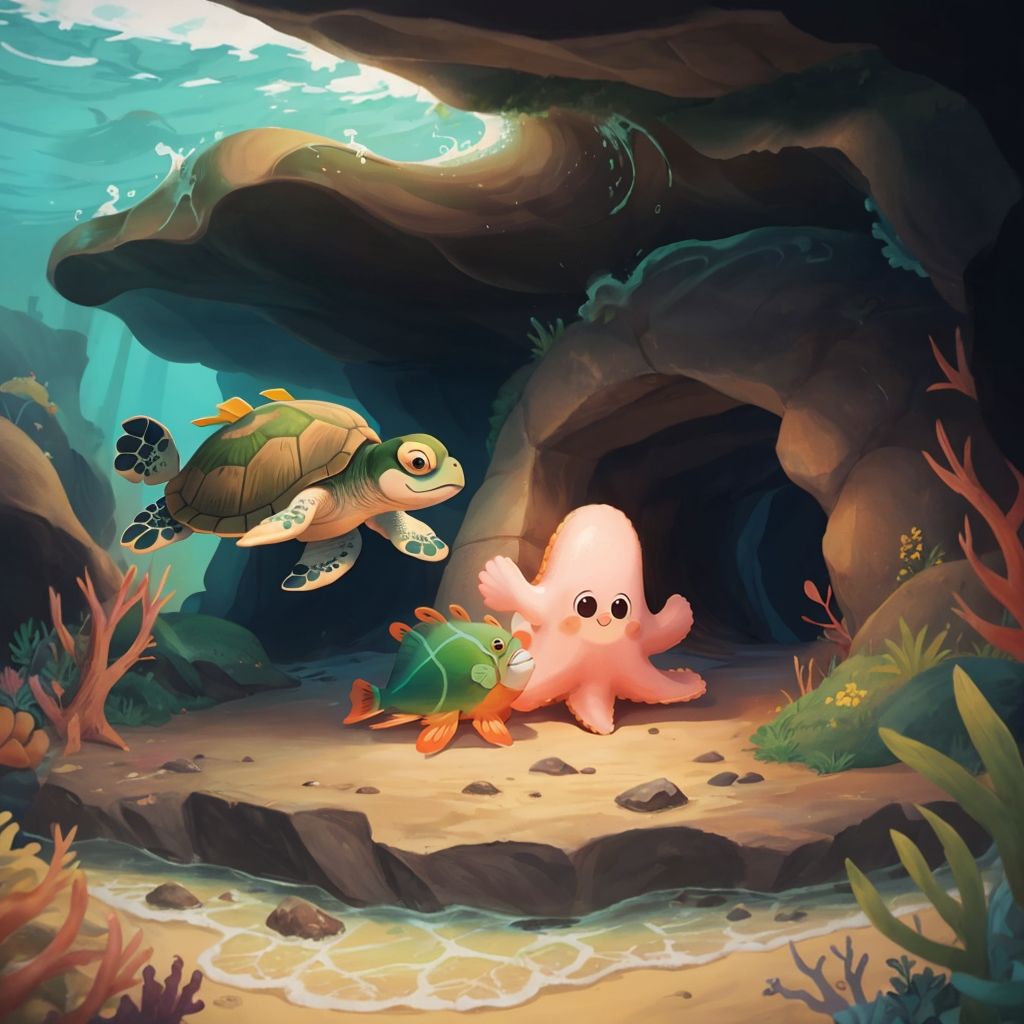
Scene 1 A big storm came to the ocean. The waves were very tall, and the wind howled. The clownfish, The Starfish, and Sea turtle hid in a safe cave. Scene 2 The dolphin could not find a safe place. The strong waves tossed him around. He was worried. Scene 3 Clownfish saw how scared Dolphin was. "Come inside the cave with us, Dolphin!" he called. Scene 4 Dolphin swam to the cave and hid with his friends. They huddled together, feeling safe inside. Scene 5 The storm raged for a long time. But finally, it started to calm down. The waves got smaller, and the wind stopped howling. Scene 6 Clownfish, Starfish, Sea turtle, and Dolphin slowly came out of the cave. The sun was shining again, and the ocean was calm. Scene 7 They were all happy to be safe. They played together in the warm sunshine. Dolphin thanked his friends for helping him. They knew that friends always help each other, even during a scary storm.
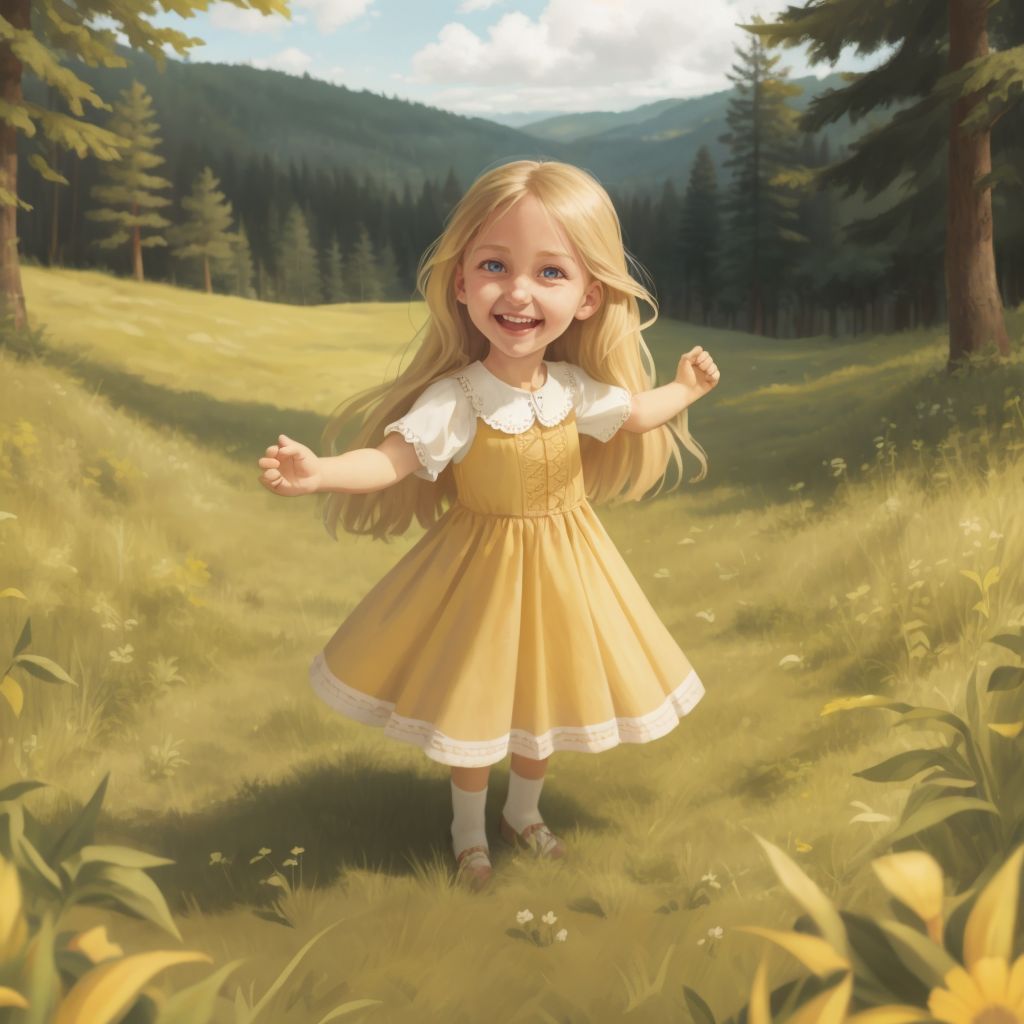
This is lilium She is clever and brave But one thing she is not Is well behaved When she is good she’s extraordinary But mostly, lilium is… naughty …
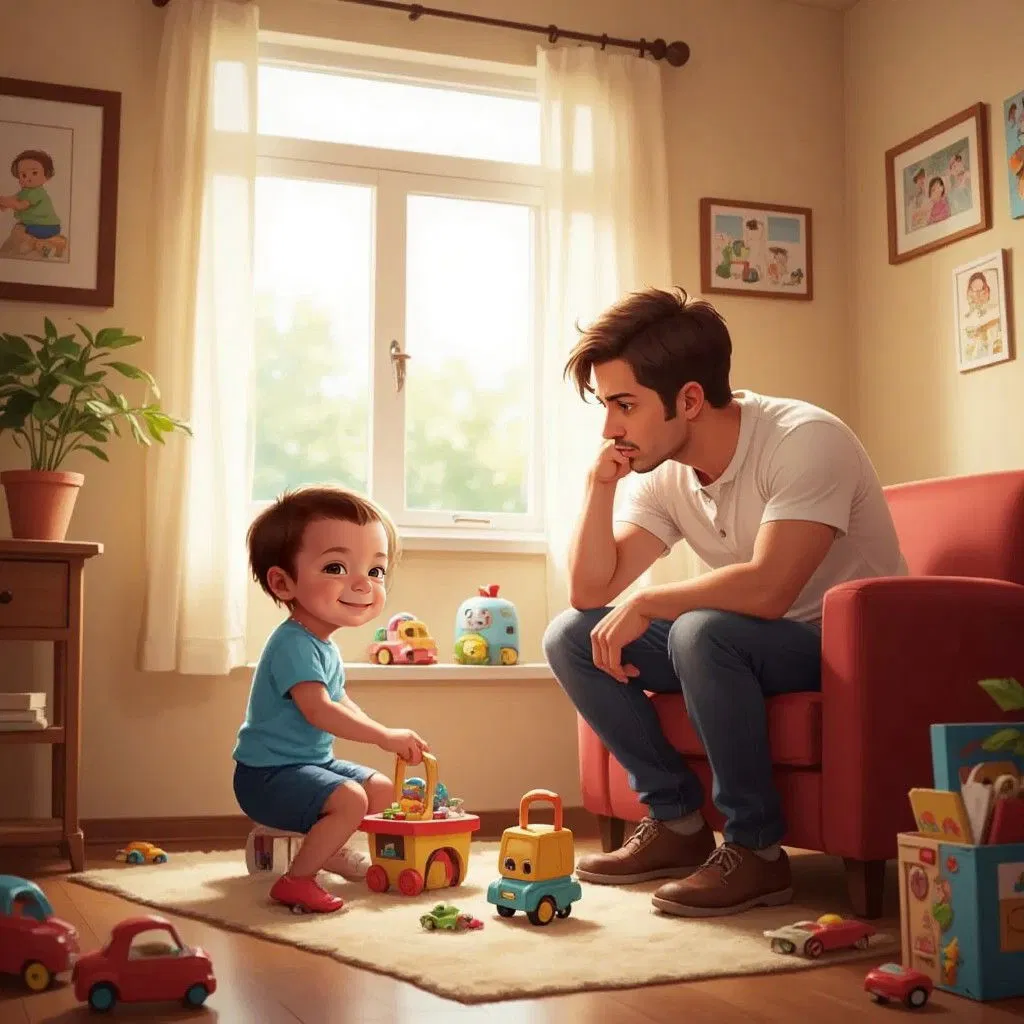
Daddy took a lot of pills just so he could have some thrills. One night he drank too much beer and accidentally forgot to steer. His car rolled into a few ditches which caused him to have to get some stitches. Since daddy had anther person's prescription, he caught a felony conviction. At Alcoholic Anonymous meetings my daddy prays since his judge sent him to rehab for 90 days
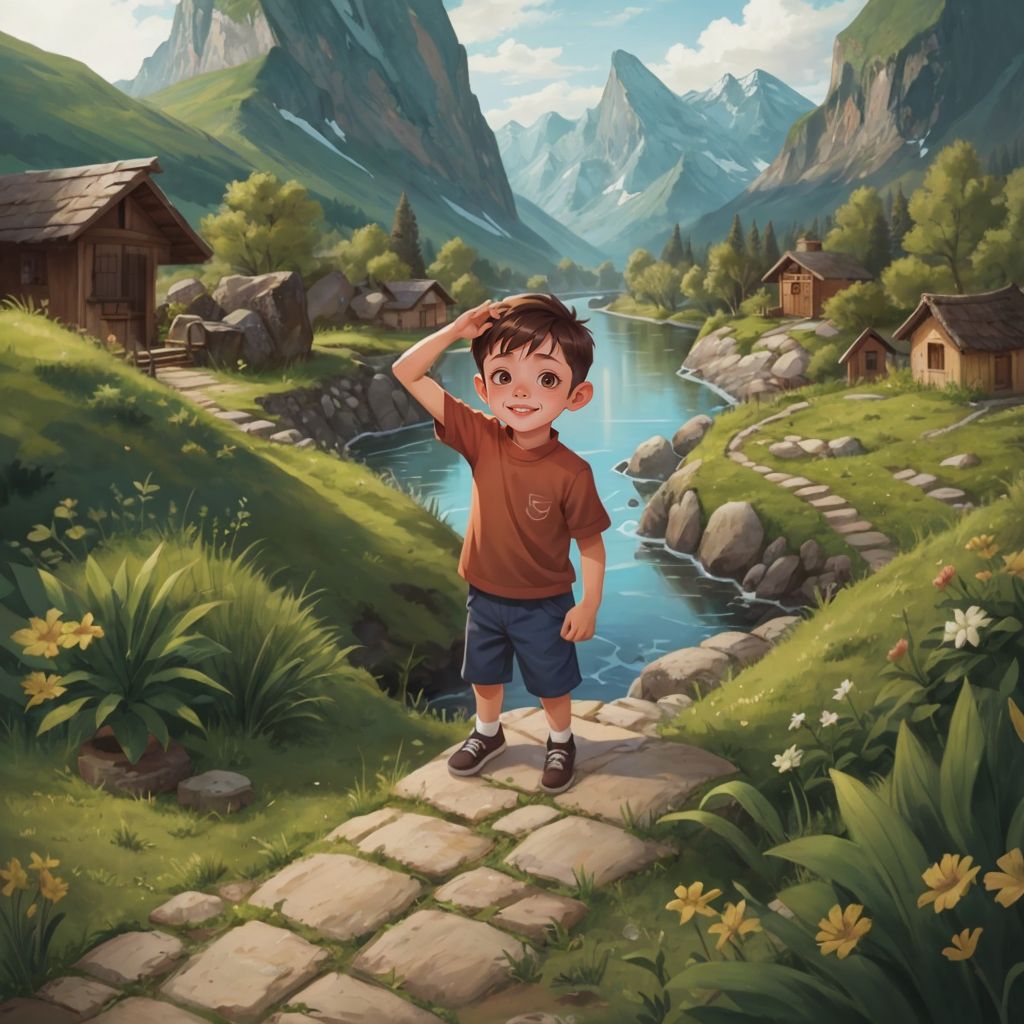
Once upon a time in a cozy little village nestled between mountains and rivers lived a curious boy named Yuann. Yuann is a special kid, he had a special gift—he could see and feel emotions in vibrant colors! One sunny morning, Yuann woke up feeling a flutter of excitement in his chest. His friend, Owlivia, had told him about a magical forest where emotions came to life in extraordinary ways. "I must see this forest for myself!" thought Yuann, and off he went on an adventure.

Rural Cambodia during the Khmer Rouge regime (1975-1979), where intense fear and secrecy dominate. A farmer lives under the constant threat of the Khmer Rouge, who enforce brutal policies against intellectuals, ethnic minorities, and anyone deemed counter to their regime. The farmer witnesses the arrest and disappearance of neighbors, realizing that the Khmer Rouge’s brutality could soon affect those he knows and cares about. He decides to act rather than stand by, initiating his resistance. The farmer begins secretly hiding families on his property, moving them at night and smuggling food. He faces immense risk, aware that being caught would lead to execution for him and everyone he’s hiding. Rumors circulate that villagers are betraying each other to save themselves. The farmer becomes increasingly paranoid but is determined to stay strong and support those hiding on his property. Soldiers arrive to search his home. In a moment of intense danger, the farmer keeps his composure, calmly engaging the soldiers in conversation to avoid suspicion while hiding his terror. The soldiers move on, narrowly missing the hidden families. After the soldiers leave, the farmer and the families he sheltered are left in a quiet, tense relief. The families decide to move on the next day to prevent further danger to the farmer. Survivors, inspired by the farmer’s courage, tell his story in whispered tones to others, spreading awareness about the possibility of resistance even under a brutal regime.

.
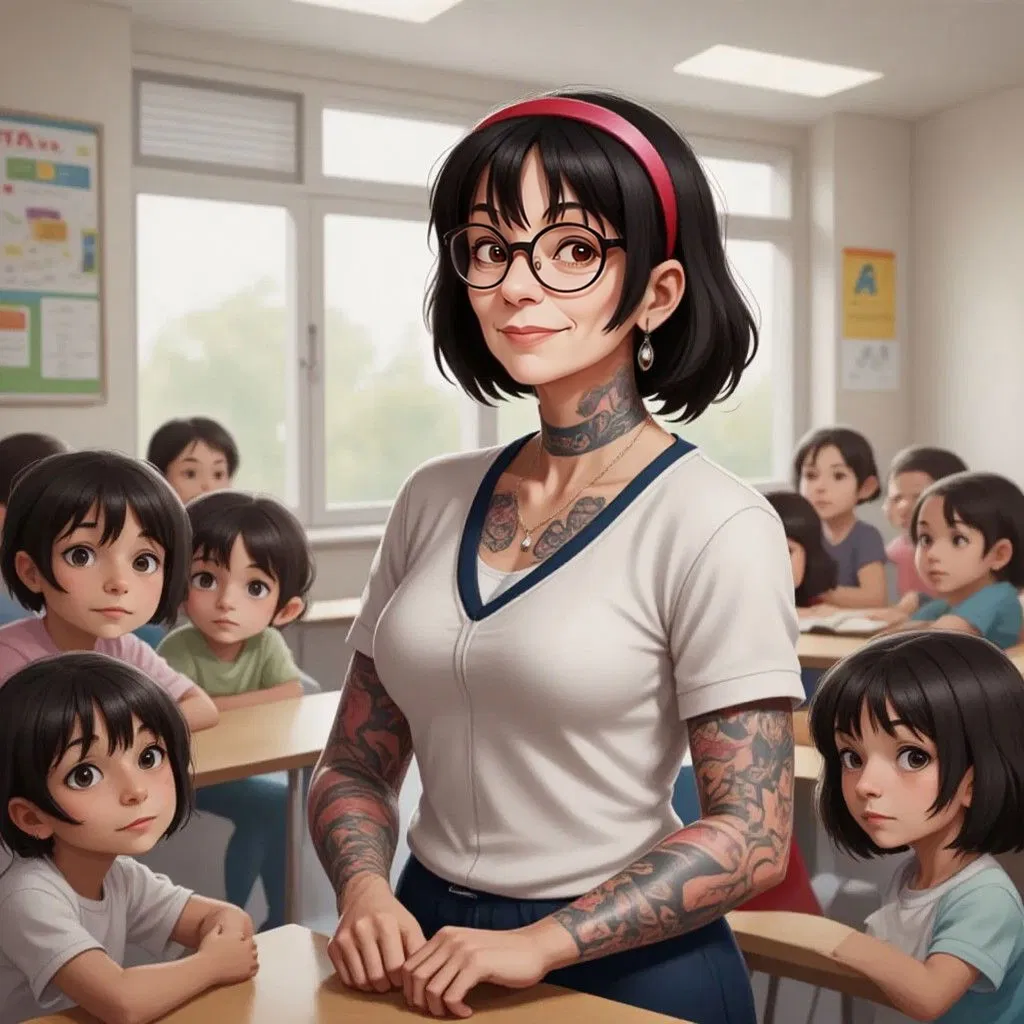
Beginning: A young student (or the whole class) notices their teacher’s tattoos and starts wondering why an adult would have drawings on their skin. Some kids might think it's cool, while others may have been told that tattoos are bad or scary. Tattoos are art and a form of self-expression. Everyone has different ways of telling their story. Judging others based on appearances is not fair. Creativity comes in many forms—books, paintings, music, and even tattoos! Diversity makes the world a more beautiful place Middle: The teacher shares the meaning behind some of their tattoos—maybe one represents family, another is a favorite book character, and another is a beautiful design they loved. They explain that tattoos are like artwork on skin, just like paintings in a museum or illustrations in a book. The students begin to see tattoos in a new way and start thinking about what kind of art or stories they would want to express. End: The class embraces the idea that tattoos are just another way of sharing stories and creativity. Maybe the students create their own “tattoos” with washable markers or drawings on paper, designing artwork that represents their favorite things. The book ends with the teacher reminding them that everyone expresses themselves in different ways, and that’s what makes the world colorful and exciting!
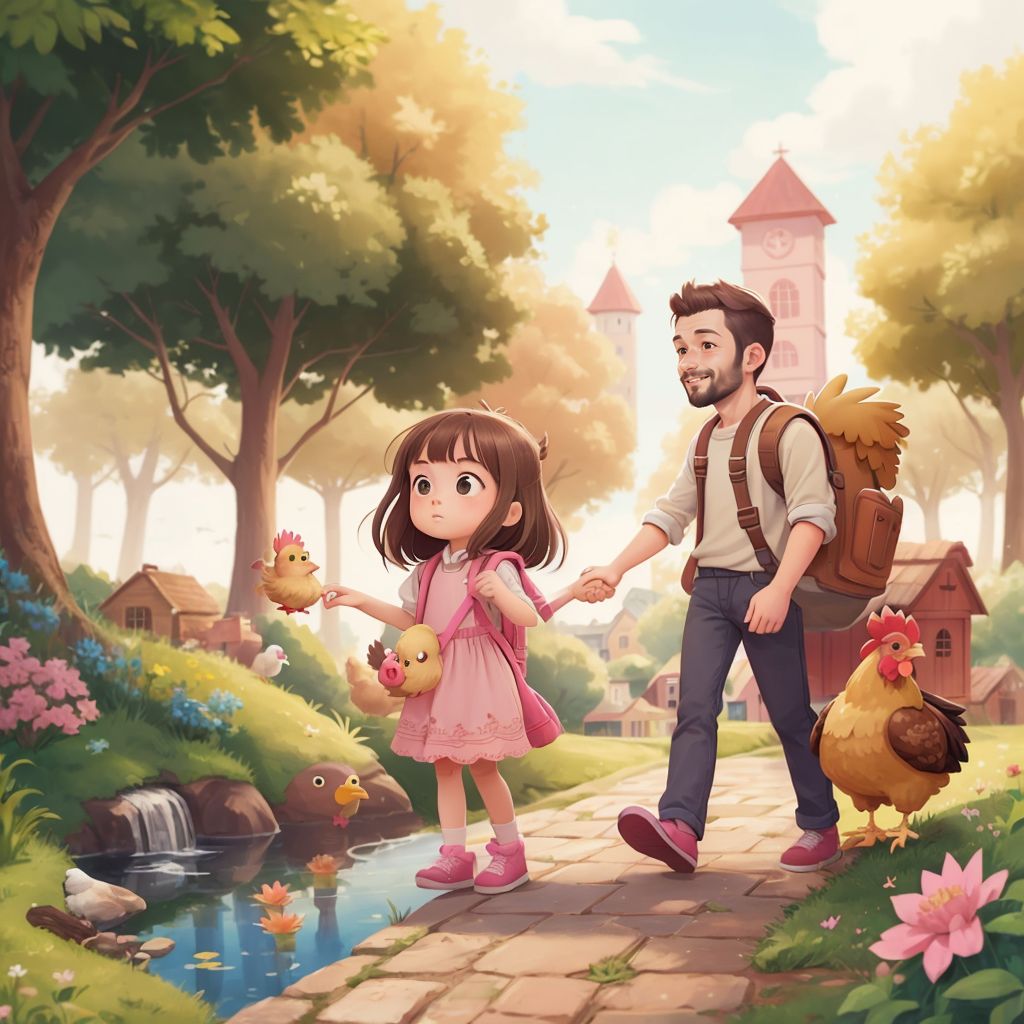
Rosie Is a happy little girl who goes to wardpark in bangor with her daddy, in the park there is a pond a chicken house and a kids park with swings and slides. When feeding the chickens, a little chicken called red begins to talk to her, she let's him out of the chicken house and they go on a fun adventure. They chase the ducks, play in the park and climb trees. Rosie brings Red home and they play in the green house before taking little red home. They became the best of friends and Rosie couldn't wait to tell daddy all about it at bedtime
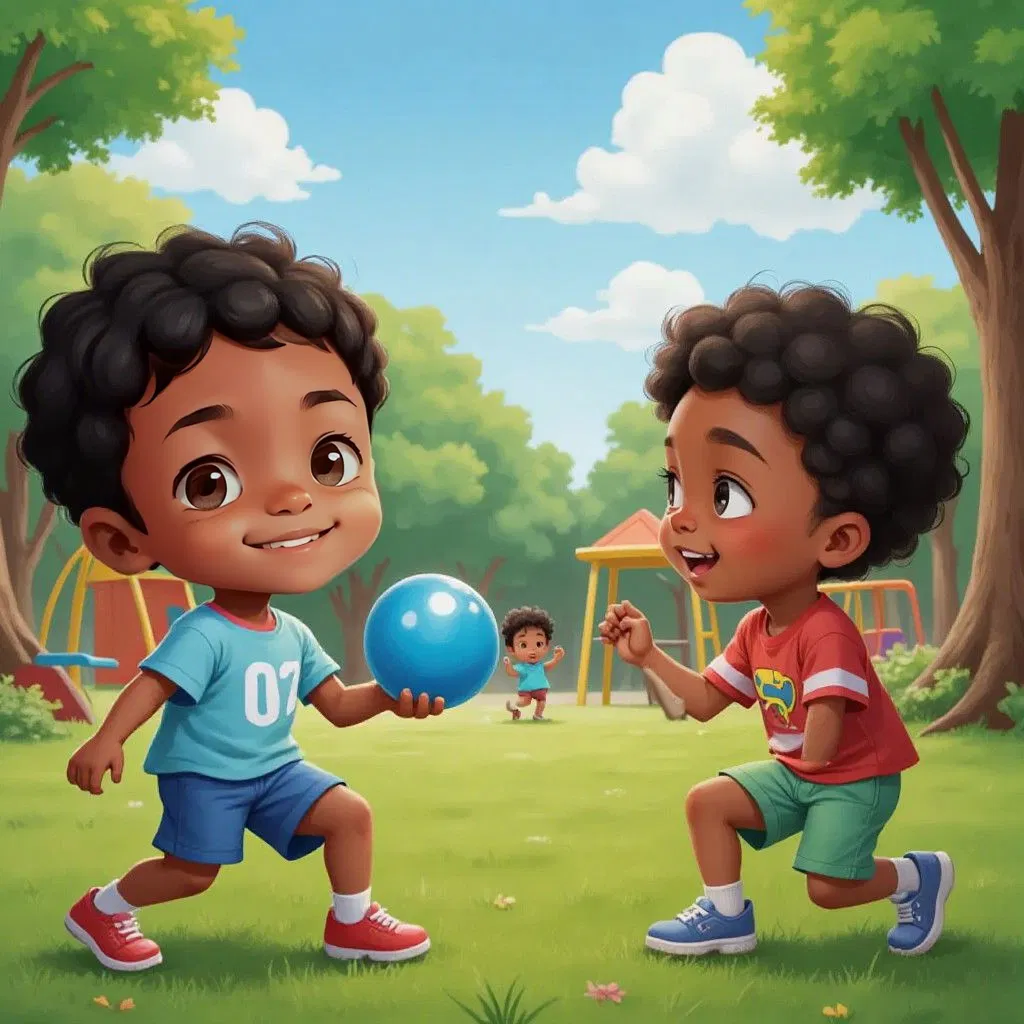
**The Magic Blue Ball** Once upon a time, in a little village, there was a boy named Timi who loved his bright blue ball. It was shiny, bouncy, and made the most cheerful sound when it hit the ground. Timi called it his "magic ball." One sunny afternoon, Timi was playing in the park when his friend Ayo came by. "Wow, Timi! Your ball is so cool! Can I play with it?" Ayo asked, his eyes sparkling with excitement. Timi held the ball tightly. "But it’s my special ball. What if it gets lost?" he said nervously. Just then, a soft wind blew through the park, and a little bird chirped from a nearby tree. "Sharing brings smiles!" it seemed to sing. Timi thought for a moment. "Okay, Ayo, you can play with it. Let’s play together!" Ayo’s face lit up like the sun, and the two friends tossed the ball back and forth, laughing and cheering as they ran around the park. Soon, other children joined in too, and the little park was filled with giggles and joy. By the end of the day, Timi realized something magical. His ball didn’t just make him happy—it made everyone happy when they played together. As they sat under the tree, Ayo smiled and said, "Thanks for sharing, Timi. This was the best day ever!" From that day on, Timi’s magic ball wasn’t just his—it was everyone’s favorite. And Timi discovered that sharing really did bring the biggest smiles. The end.
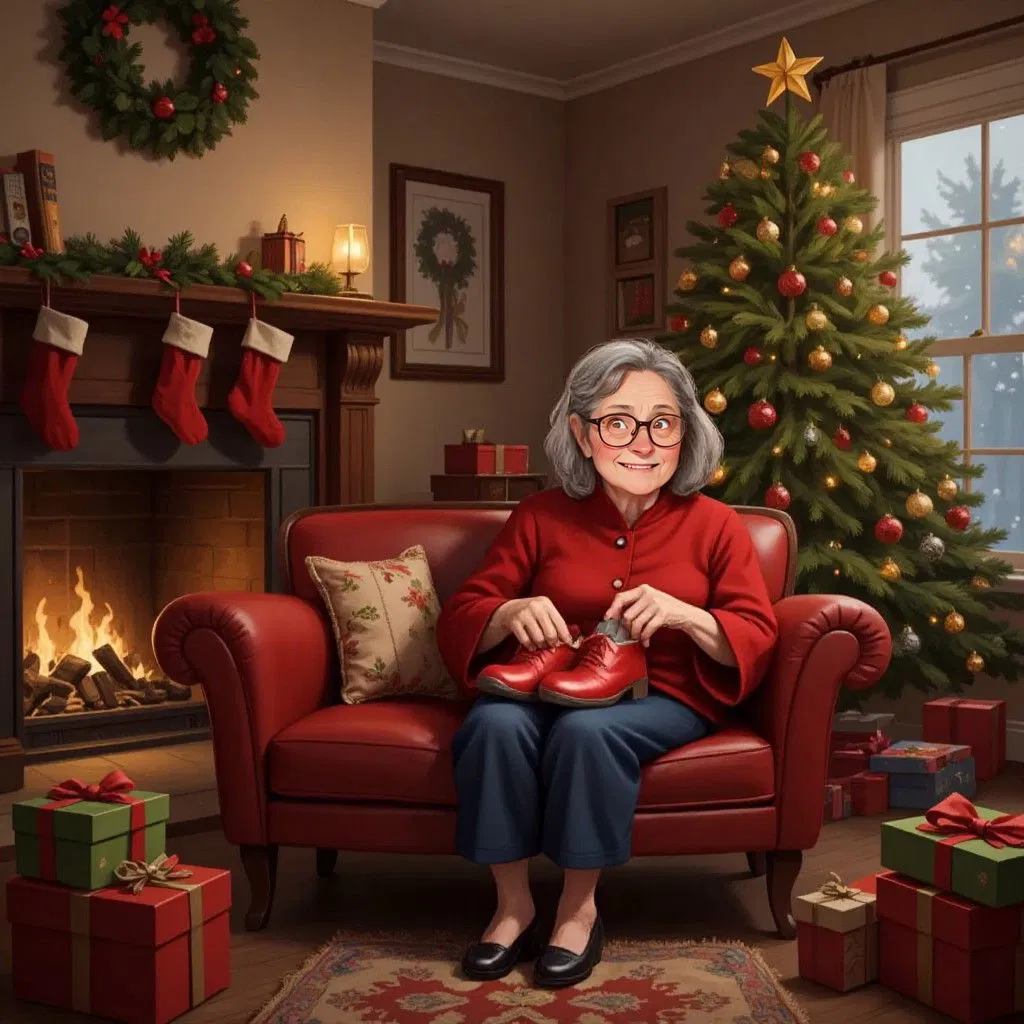
Santa brought Cheryl some new shoes for Christmas, but when she tried them on they weren’t comfortable because they were elf shoes. Cheryl tried many different ways to fix the elf shoes. She tried to cook the elf shoes in the oven but they just melted. She’d ran over the elf shoes with the car but they were flattened. She sent the elf shoes to Mars in a rocket ship but they didn’t come back. She left the elf shoes in the alley hoping a shoeless person would take the elf shoes but nobody took the elf shoes. After a few days she tried the elf shoes on again and this time, to Cheryl's surprise, they were perfect. She couldn't understand why the elf shoes started to feel better after a few days had passed but from that day forward she wore her elf shoes everywhere.
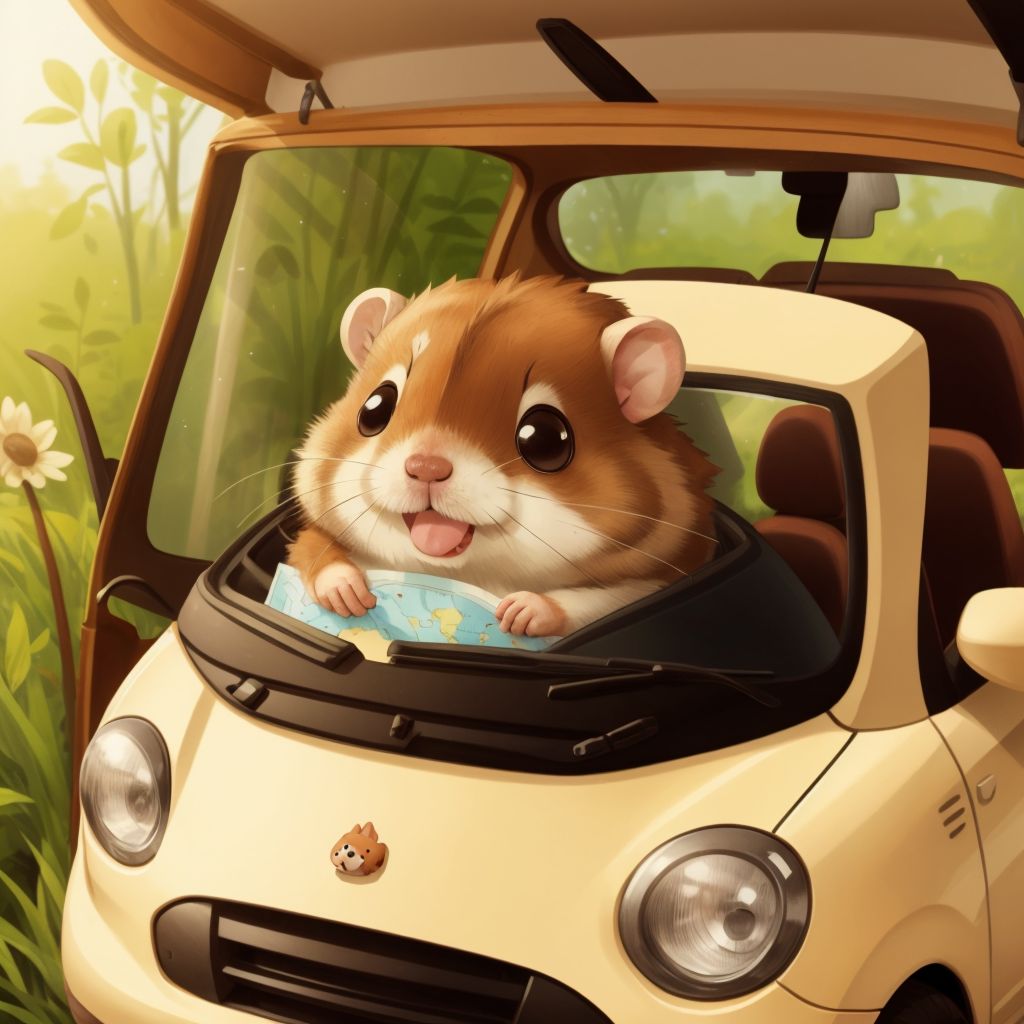
A hamster names Hammie falls asleep and dreams about him driving to an airport, flying to Miami and enjoying the city
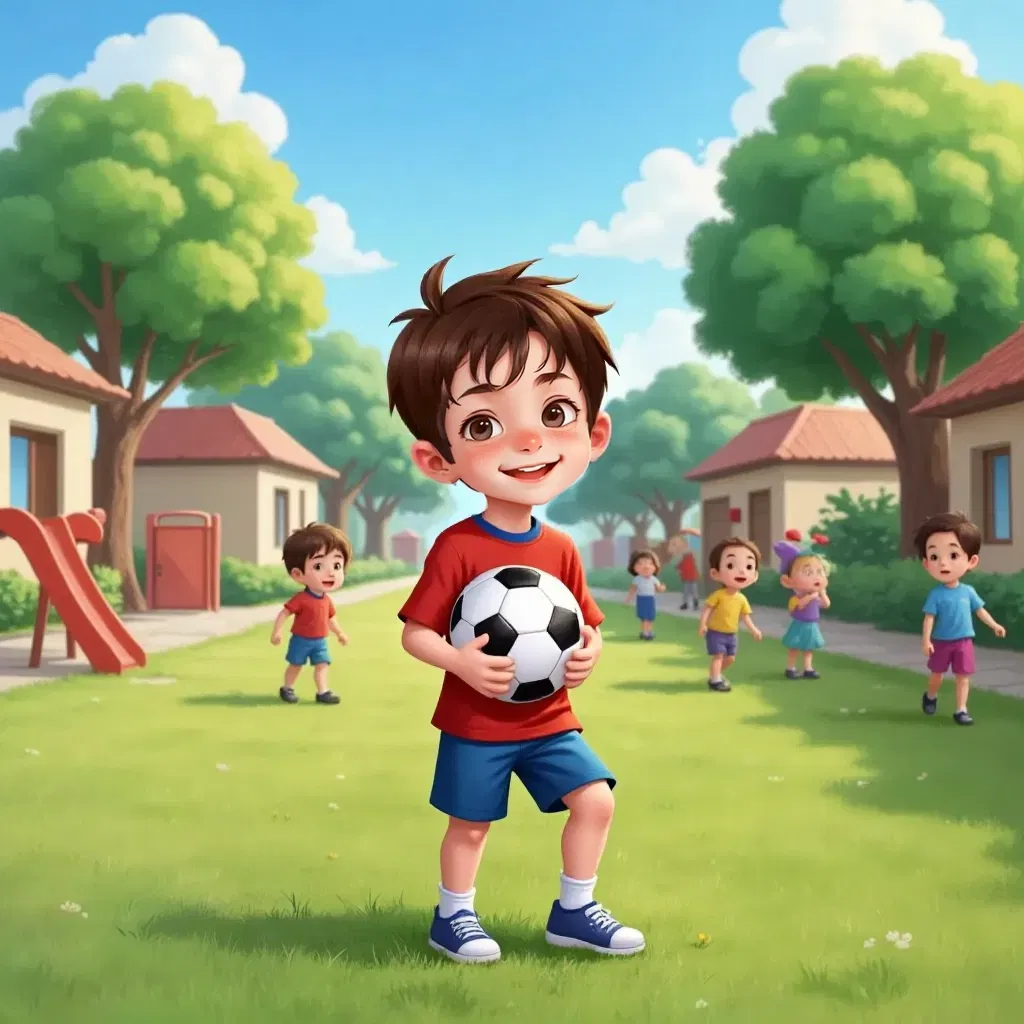
Generate a 10-12 page children's book based on the Parable of the Unforgiving Servant (Matthew 18:21-35), teaching forgiveness and second chances in a relatable, human-like setting with simple, engaging language for young readers. The protagonist is a child who makes a mistake but learns about forgiveness. His best friend is kind and forgiving, while another friend later makes a mistake against him, mirroring his own. The setting is a school and playground, with events happening before, during, and after school, including a stormy night that adds conflict. The cover page should feature the protagonist smiling with a soccer ball in a cheerful schoolyard. The story begins with him playing soccer daily, but one day he forgets his ball. His best friend lends him one, asking him to return it the next day. The protagonist enjoys playing but carelessly leaves it outside overnight. A storm ruins it, leaving it muddy and stuck in a tree. The next day, he apologizes, and his friend forgives him. Later, another classmate borrows something from him but accidentally damages it. Instead of forgiving, the protagonist gets angry and refuses to accept the apology. His best friend reminds him of his own mistake, making him realize he should also forgive. He apologizes for his reaction, forgives his classmate, and they all play together, reinforcing the lesson that forgiveness strengthens friendships. Illustrations should be bright and colorful, with expressive characters showing emotions like happiness, guilt, and relief. The book should conclude with the moral: If we want others to forgive us, we must forgive them too. This ensures a structured, meaningful story that is engaging and easy for children to understand.